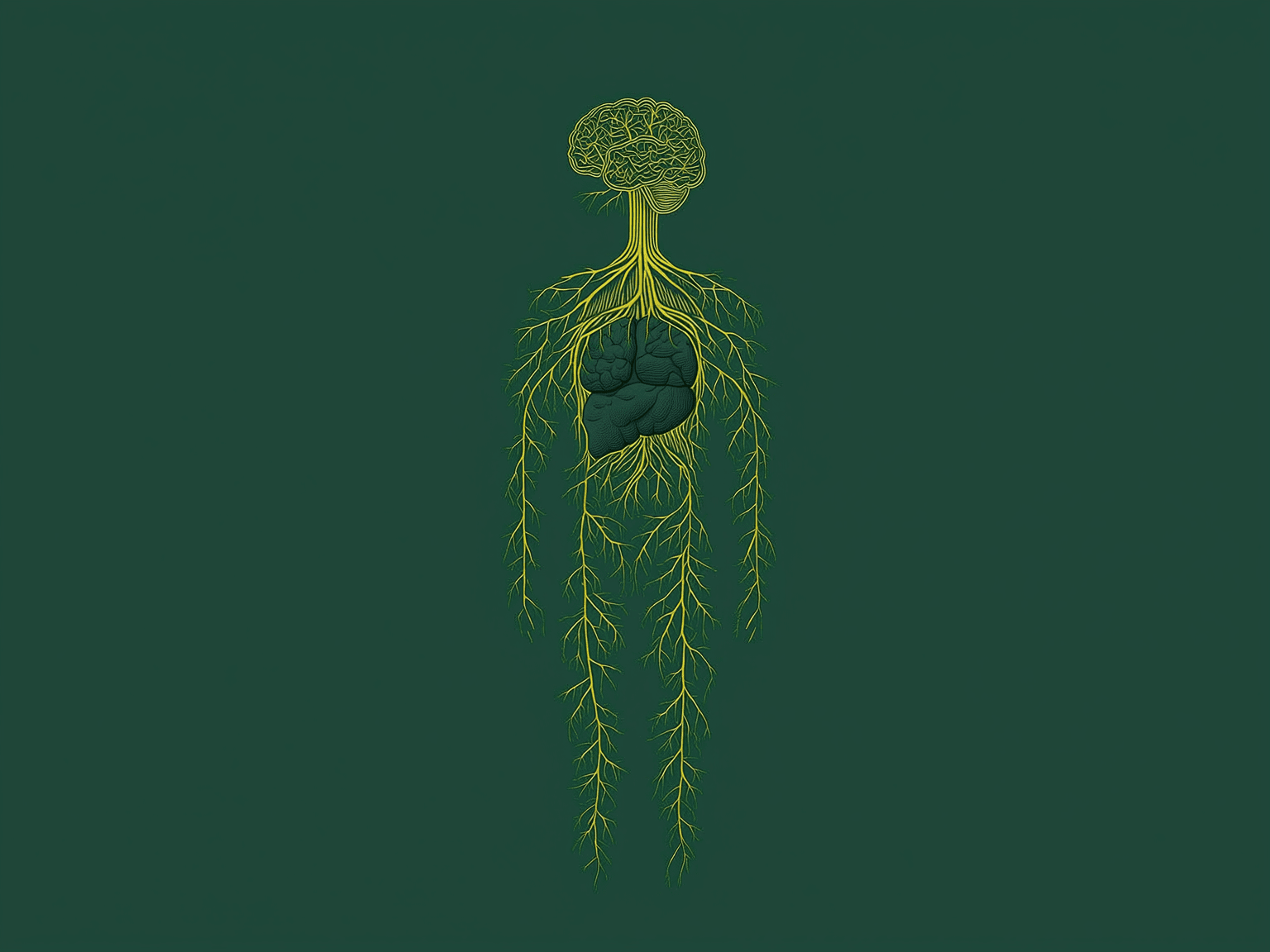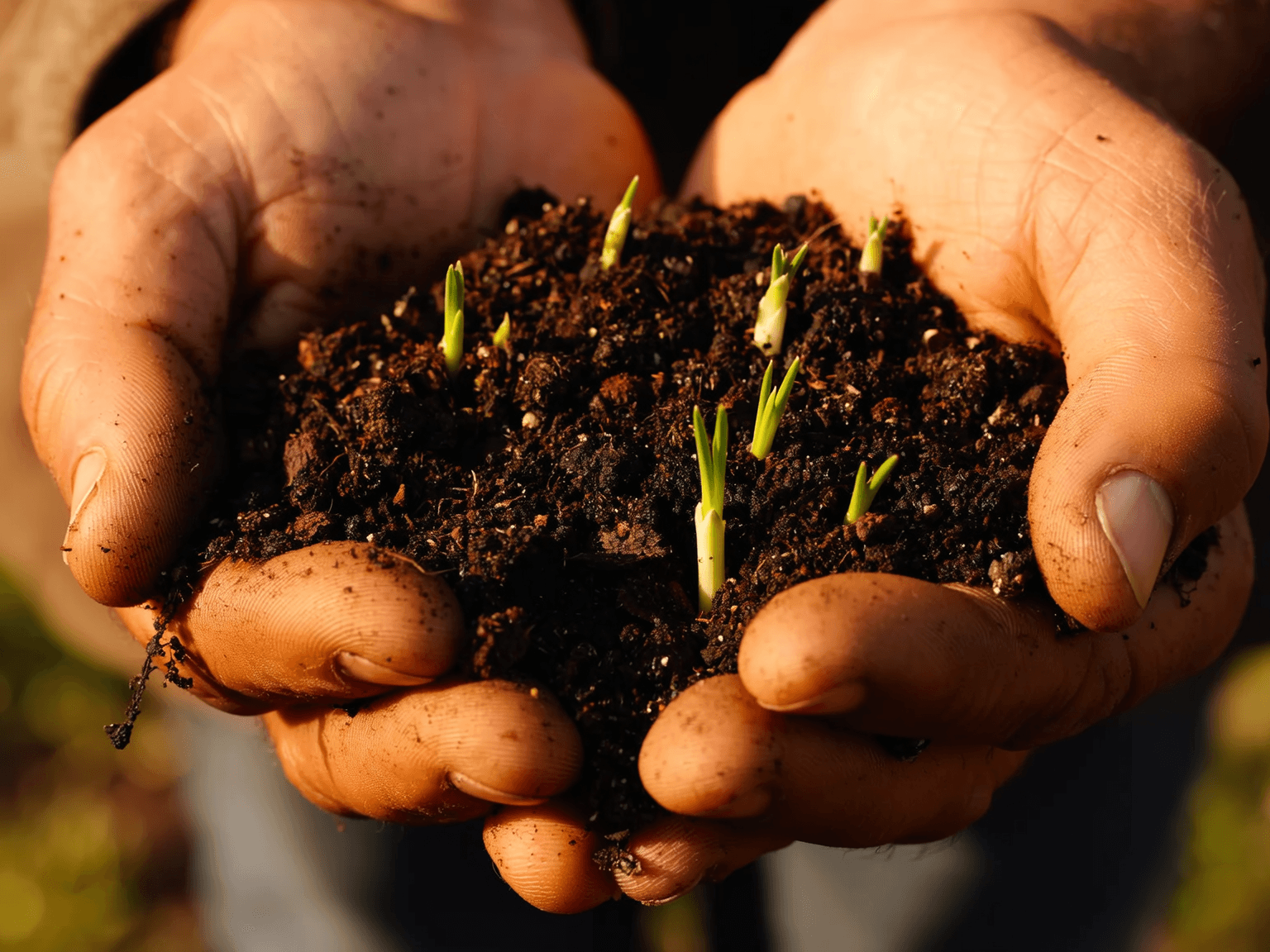
There is a chain of nourishment that begins not on a plate, not in a kitchen, but in a handful of living earth — and what happens to that soil ultimately determines what happens inside your skull. This is not poetic licence. It is ecology made personal.
The Soil Microbiome Mirrors Our Own
Healthy soil is not dirt. It is a living ecosystem of extraordinary complexity. A single teaspoon of rich agricultural soil can contain more microorganisms than there are people on Earth — bacteria, fungi, nematodes, protozoa, and archaea all engaged in a constant web of exchange, breaking down organic matter, cycling nutrients, and building the molecular foundation of everything that grows in it.
What scientists have increasingly recognised is that the soil microbiome and the human gut microbiome are not merely analogous — they are connected. The microbes in the food we eat carry microbial signatures from the soil they grew in. When we eat vegetables grown in biologically diverse, living soil, we consume traces of that diversity. Our gut responds. This is why the industrialisation of soil has not just been an agricultural problem. It has been a health problem.
Mycobacterium Vaccae: Dirt as Medicine
In 2007, neuroscientist Christopher Lowry at the University of Bristol published a finding that turned heads: Mycobacterium vaccae, a bacteria found naturally in soil, activated neurons in the brain that produce serotonin. When injected into mice, the bacteria triggered antidepressant-like effects. When later studies applied it topically or had subjects inhale it during outdoor activities, similar patterns emerged in humans.
This organism is not exotic. It is everywhere that soil is healthy and alive — in garden beds, forest floors, fields. Gardeners have long reported feeling calmer and more grounded after working with their hands in earth. There may be a deeply literal explanation for that experience. Kneeling in a healthy garden bed, your skin and lungs are in contact with organisms that speak directly to the nervous system's mood-regulating pathways.
The Mineral Crisis Nobody Is Talking About
Over the past century of industrial agriculture, the mineral content of commonly grown vegetables has declined substantially. Studies comparing the nutrient density of produce in the 1950s to that grown today have found drops of 20 to 80 percent in key minerals — zinc, magnesium, selenium, and iron among them.
These are not incidental nutrients. They are essential to brain function.
Zinc is required for neurogenesis — the creation of new neurons — and plays a central role in regulating the GABA and glutamate systems that govern mood and anxiety. Magnesium is involved in over 300 enzymatic reactions, including those that govern nerve transmission and the stress response. Low magnesium is one of the strongest dietary correlates of anxiety and depression. Selenium is critical to thyroid function and to the production of glutathione, the brain's primary antioxidant defence.
When soil is depleted — stripped of organic matter by tilling, drenched in synthetic fertilisers that bypass the microbial network, and planted with the same monoculture year after year — it cannot provide the mineral complexity that growing plants need. And when plants cannot draw up the minerals they need, neither can we.
Regenerative Farming vs. Industrial Monoculture
Conventional monoculture farming treats soil as a medium — something to hold roots while nutrients are delivered externally. It is efficient in the narrow sense of producing large quantities of a single crop, but it is ecologically destructive. Each harvest removes organic matter. Synthetic nitrogen disrupts the fungal networks — mycorrhizal fungi — that form the soil's natural internet, ferrying minerals to plant roots in exchange for carbon. Over decades, the soil dies.
Regenerative agriculture takes the opposite approach. Cover crops, crop rotation, minimal tillage, and the integration of animals into farming systems build soil organic matter year over year. The soil becomes richer, more diverse, more alive — and the food grown in it reflects that vitality.
Garden as Medicine Cabinet
One of the most quietly radical acts available to anyone with a patch of ground is to put their bare hands into compost-rich soil, grow something, and eat it. The benefits are compounded: the physical activity, the exposure to Mycobacterium vaccae and allied organisms, the consumption of food grown in biologically active soil, and the deeply human satisfaction of watching something emerge from the earth.
Seasonal eating, where what is on the plate reflects what is ripe and local rather than what has been shipped from a thousand kilometres away and kept in cold storage for months, has similar logic. Nutrient density peaks at harvest. It decreases with every day of transit and storage. Eating locally is not nostalgia. It is biochemistry.
The connection between soil and mind is one of the oldest relationships in human history — and one of the most urgently worth restoring.
Brain Pantry
Science-backed. Nature-rooted. Gut-led.