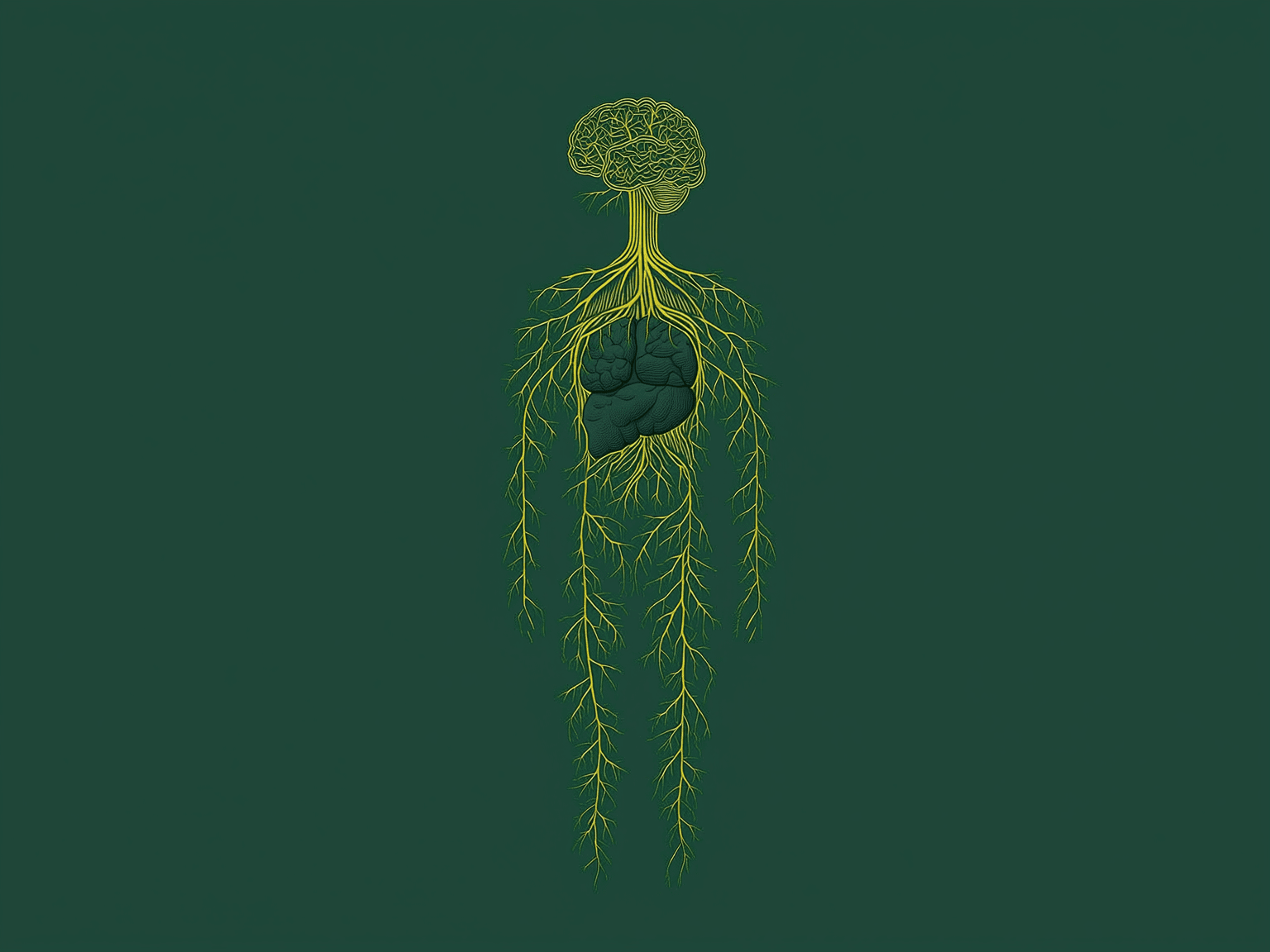
Beneath the surface of every mood, every moment of mental fog, and every inexplicable surge of anxiety lives a conversation — one happening not in your head, but in your gut. Modern neuroscience has spent decades mapping the brain, but one of its most startling discoveries sits far from the skull: your digestive system is effectively a second brain, and it has been steering your mental life all along.
The Vagus Nerve: Your Body's Internal Highway
The vagus nerve is the longest cranial nerve in the body, stretching from your brainstem down through your chest and into your abdomen, where it branches out like the roots of an ancient tree. It is the physical line of communication between your gut and your brain — a bidirectional highway carrying more information upward, from belly to brain, than in any other direction.
This means your gut is not passively receiving orders from above. It is sending them. When you feel a gut feeling, a pit in your stomach before a difficult conversation, or the lightness after a nourishing meal — that is your enteric nervous system speaking directly to your central nervous system through this ancient, underappreciated nerve.
The Enteric Nervous System: A Brain in Your Belly
Wrapped around your gastrointestinal tract are approximately 500 million neurons — more than exist in your spinal cord. Scientists call this network the enteric nervous system, and it operates with a degree of independence that earned it the nickname "the second brain." It manages digestion without waiting for instructions from above. It feels. It reacts. And it talks.
What makes this extraordinary is not just its size, but its neurochemical sophistication. The enteric nervous system produces and responds to many of the same neurotransmitters found in the brain, including dopamine, glutamate, and — most remarkably — serotonin.
90% of Serotonin Lives in Your Gut
Serotonin is often described as the brain's "feel-good chemical," and that framing, while well-intentioned, misses something fundamental: approximately 90 to 95 percent of the body's serotonin is produced in the gut, not the brain. Specialised cells lining the intestinal walls — enterochromaffin cells — manufacture this neurotransmitter in response to food, movement, and the microbial environment surrounding them.
This gut-produced serotonin does not cross the blood-brain barrier, so it does not directly become "brain serotonin." But it plays a critical role in regulating intestinal movement, immune signalling, and the local nervous environment of the gut itself — which then feeds signals upward through the vagus nerve. Disturb the gut's serotonin factory, and you disturb the conversation.
The Microbiome: The Hidden Population Running the Show
Living inside your gut — in the intestines, primarily the large intestine — are roughly 100 trillion microorganisms: bacteria, fungi, archaea, and viruses that collectively make up your gut microbiome. This community weighs about 1.5 kilograms and contains more genes than the entire human genome. They are not passengers. They are active participants in your biology.
Research has shown that the diversity of the gut microbiome correlates strongly with mental health outcomes. People with depression, anxiety disorders, and even conditions like autism spectrum disorder tend to have less diverse gut microbiomes. In animal studies, transplanting the gut bacteria of anxious mice into germ-free mice transfers the anxious behaviour. The bacteria are carrying something — whether it is specific metabolites, immune signals, or direct neurotransmitter precursors — that shapes mood and cognition.
What You Eat Shapes Who You Are
The microbiome is shaped, above all, by food. Fibre feeds the beneficial bacteria that produce short-chain fatty acids — compounds that nourish the gut lining, reduce inflammation, and support the production of neurotransmitter precursors. Fermented foods like yoghurt, kefir, kimchi, and sauerkraut introduce live cultures that diversify the microbial population. Prebiotic-rich foods — garlic, leeks, Jerusalem artichokes, oats — feed the organisms already there.
Conversely, a diet high in ultra-processed foods, refined sugars, and industrial seed oils appears to reduce microbial diversity, increase gut permeability (often called "leaky gut"), and promote low-grade systemic inflammation — a pattern that is increasingly linked to depression and cognitive decline.
The gut-brain axis is not a metaphor. It is an anatomical, biochemical, and microbial reality. And like any relationship worth having, it rewards attention.
Brain Pantry
Science-backed. Nature-rooted. Gut-led.