Your brain is largely made of fat. About 60 percent, in fact. And the fats it is made of came, at some point, from the food you ate — and from the food the animals you ate, ate. This chain of dietary consequence is one of the most underappreciated stories in nutritional neuroscience, and understanding it changes how you think about the meat, dairy, and eggs on your plate.
You Are What Your Food Ate
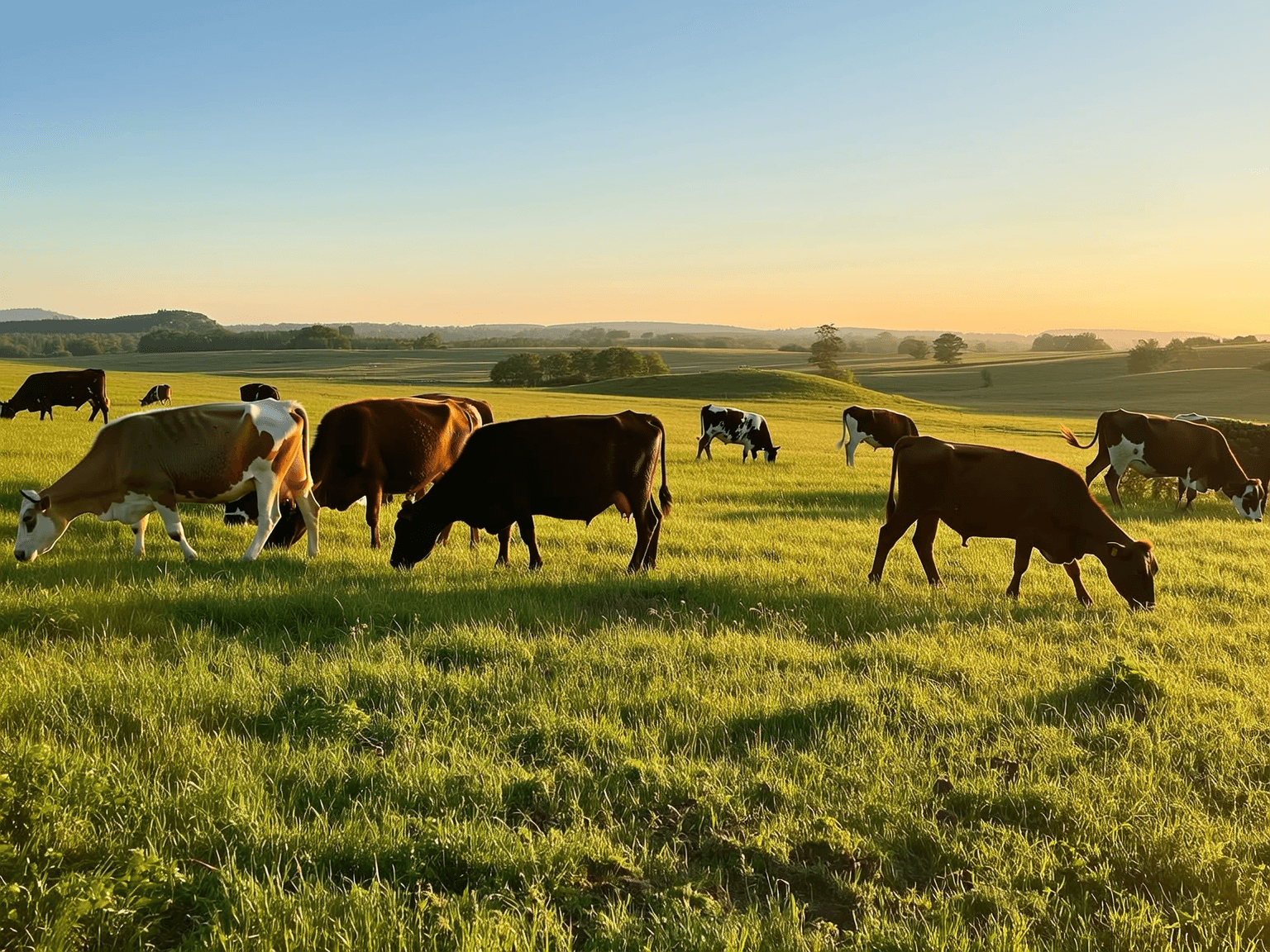
The principle is deceptively simple: animals are biological accumulators. What they eat becomes their tissues, their fat, their milk, their eggs. A cow grazing on diverse pasture grasses, wildflowers, and legumes builds a different biological profile than a cow fed a grain-heavy diet in a feedlot. These differences are measurable, significant, and consequential for human health.
The most important difference comes down to fatty acids — specifically, the ratio between omega-3 and omega-6 polyunsaturated fats.
The Omega-3 to Omega-6 Ratio
Both omega-3 and omega-6 fatty acids are essential — the body cannot synthesise them and must obtain them through food. The problem is not their presence but their proportion. In ancestral human diets, the ratio of omega-6 to omega-3 is estimated to have been roughly 1:1 to 4:1. In the typical modern Western diet, it sits closer to 15:1 or even 20:1, heavily weighted toward omega-6.
This imbalance matters because omega-6 and omega-3 compete for the same enzymatic pathways in the body. In excess, omega-6 promotes a pro-inflammatory environment. Omega-3 is anti-inflammatory and neuroprotective. The brain runs on DHA — docosahexaenoic acid — an omega-3 fatty acid that makes up a substantial portion of the brain's grey matter and is essential to neuronal membrane fluidity, synaptic function, and the synthesis of neuroprotective compounds.
Grass-fed beef contains two to four times more omega-3 fatty acids than grain-fed beef. Pasture-raised dairy and eggs show similarly elevated omega-3 profiles. When you eat an animal that has eaten as it evolved to eat, you are receiving a very different package of fats than when you eat an animal raised on an industrial diet.
DHA and the Brain You Build
DHA is not optional for a functioning brain. It is structural. The photoreceptors of the retina are among the most DHA-dense tissues in the body. The synaptic membranes of neurons require DHA to remain fluid and responsive. A diet chronically low in DHA — one that relies on grain-fed animal products, refined oils, and little oily fish — produces a different brain architecture over years and decades.
Research has linked higher DHA status to reduced risk of depression, better cognitive performance in older adults, lower rates of cognitive decline, and improved mood regulation. Conversely, low DHA is associated with increased inflammatory markers in the brain, reduced neuroplasticity, and poorer mental health outcomes.
The brain you have in your fifties is being built, molecule by molecule, by what you eat in your thirties and forties. The fat composition of your cell membranes turns over — but it turns over slowly. What you eat today becomes part of your brain's physical structure tomorrow.
CLA, Vitamin K2, and the Grass-Fed Difference
Beyond omega-3s, pasture-raised animal products contain two nutrients that deserve attention: conjugated linoleic acid (CLA) and vitamin K2.
CLA is a naturally occurring fatty acid found in the fat and milk of ruminant animals — cows, sheep, goats — that graze on grass. Grain-fed animals produce very little of it. Research has shown CLA to have anti-inflammatory, anticarcinogenic, and immune-supportive properties. While the brain research is still emerging, CLA's role in reducing systemic inflammation is directly relevant to neurological health.
Vitamin K2 — specifically the MK-4 form — is found almost exclusively in the fat of grass-fed animals. It does not appear in grain-fed meat or in grain-fed dairy in meaningful quantities. K2 is essential to the activation of proteins that regulate calcium in the body, including proteins involved in arterial health and bone density. Emerging research has also linked it to neuroprotection, with preliminary studies suggesting it plays a role in the maintenance of myelin — the protective sheath around nerve fibres — and in reducing neuroinflammation.
Practical Guidance: What to Look For
When buying beef, look for grass-fed *and* grass-finished — "grass-fed" alone sometimes means the animal ate grass early in life but was finished on grain. Dairy from pasture-raised cows carries meaningfully different nutritional properties than conventional dairy, particularly in its fat-soluble vitamin content. Eggs from hens with genuine outdoor access and exposure to grass, insects, and sunlight show higher omega-3 and vitamin D profiles.
This is not about perfection or purity. It is about understanding that the food system shapes not just our waistlines but our minds — and making choices, within whatever constraints exist, that honour that connection. The ecological and ethical dimensions align here too: animals raised on pasture are part of a system that builds soil, sequesters carbon, and restores the land. What is good for the animal, the land, and the microbiome tends, in the end, to be good for the brain.
Brain Pantry
Science-backed. Nature-rooted. Gut-led.