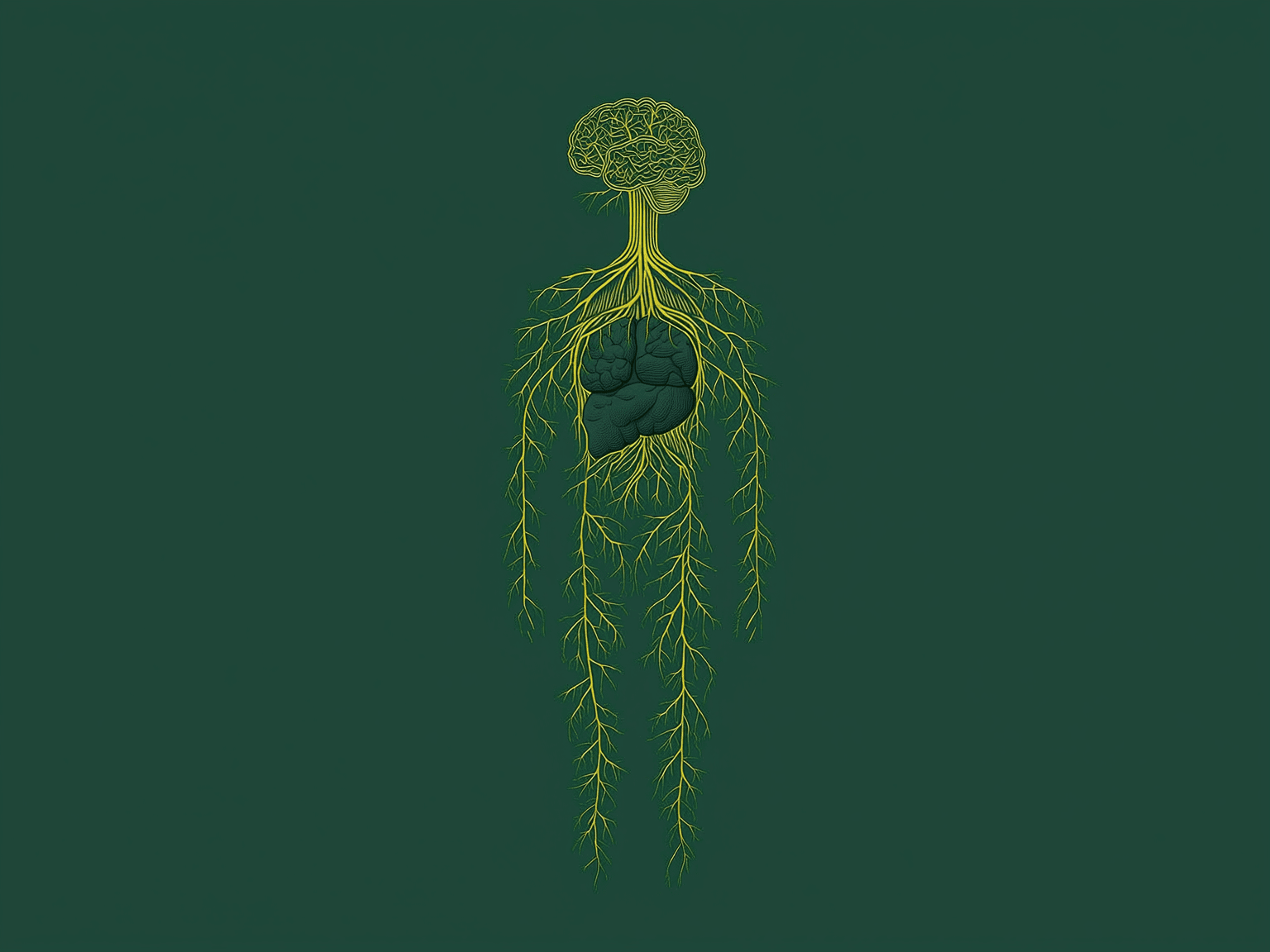
You are not just what you eat. You are what your gut bacteria eat. And the 100 trillion organisms living in your intestines have very specific preferences — ones that shape your brain more than you might realise.
The emerging science of the microbiome has fundamentally changed the way nutritional psychiatry thinks about food and mental health. It is no longer enough to ask whether a meal is nutritious for you. The more revealing question is: is it nutritious for them?
Who Lives in Your Gut
Your gut microbiome is a vast, complex ecosystem — more diverse than any rainforest, more ancient than any civilisation. The organisms that colonise your large intestine include thousands of species of bacteria, along with fungi, viruses, and archaea. In a healthy individual, these populations exist in dynamic equilibrium, checking each other's growth, producing useful compounds, and maintaining the integrity of the gut wall.
Diversity is the key metric. Research consistently shows that a more diverse microbiome correlates with better physical health, more resilient immune function, and — critically — better mental health outcomes. Studies comparing people with depression and anxiety to healthy controls repeatedly find that those with mood disorders carry a less diverse, less stable microbial community.
The question is not simply which bacteria you have, but whether the ecosystem as a whole is rich, varied, and dynamic.
What Your Bacteria Actually Eat
The primary fuel source for the beneficial bacteria in your large intestine is dietary fibre — specifically, a class of fibres called prebiotics. These are the parts of plant foods that your own digestive enzymes cannot break down, so they pass through the small intestine intact and arrive in the colon, where your microbiome goes to work.
When bacteria ferment prebiotic fibre, they produce short-chain fatty acids (SCFAs) — particularly butyrate, propionate, and acetate. These compounds are extraordinary. Butyrate is the primary fuel source for the cells lining the colon wall, maintaining what is called gut barrier integrity. A healthy gut wall is selectively permeable: it lets nutrients through and keeps pathogens out. When butyrate production drops — as it does on a low-fibre diet — the barrier weakens, and bacterial endotoxins begin to leak into the bloodstream. This is the mechanism behind so-called leaky gut, and the resulting systemic inflammation reaches the brain.
SCFAs also cross the blood-brain barrier and directly influence neuroinflammation. Butyrate has been shown in animal and human studies to have antidepressant and anxiolytic effects. It supports the production of BDNF — brain-derived neurotrophic factor — the protein that drives the growth of new neurons and the maintenance of existing ones.
The Best Foods for Your Microbiome
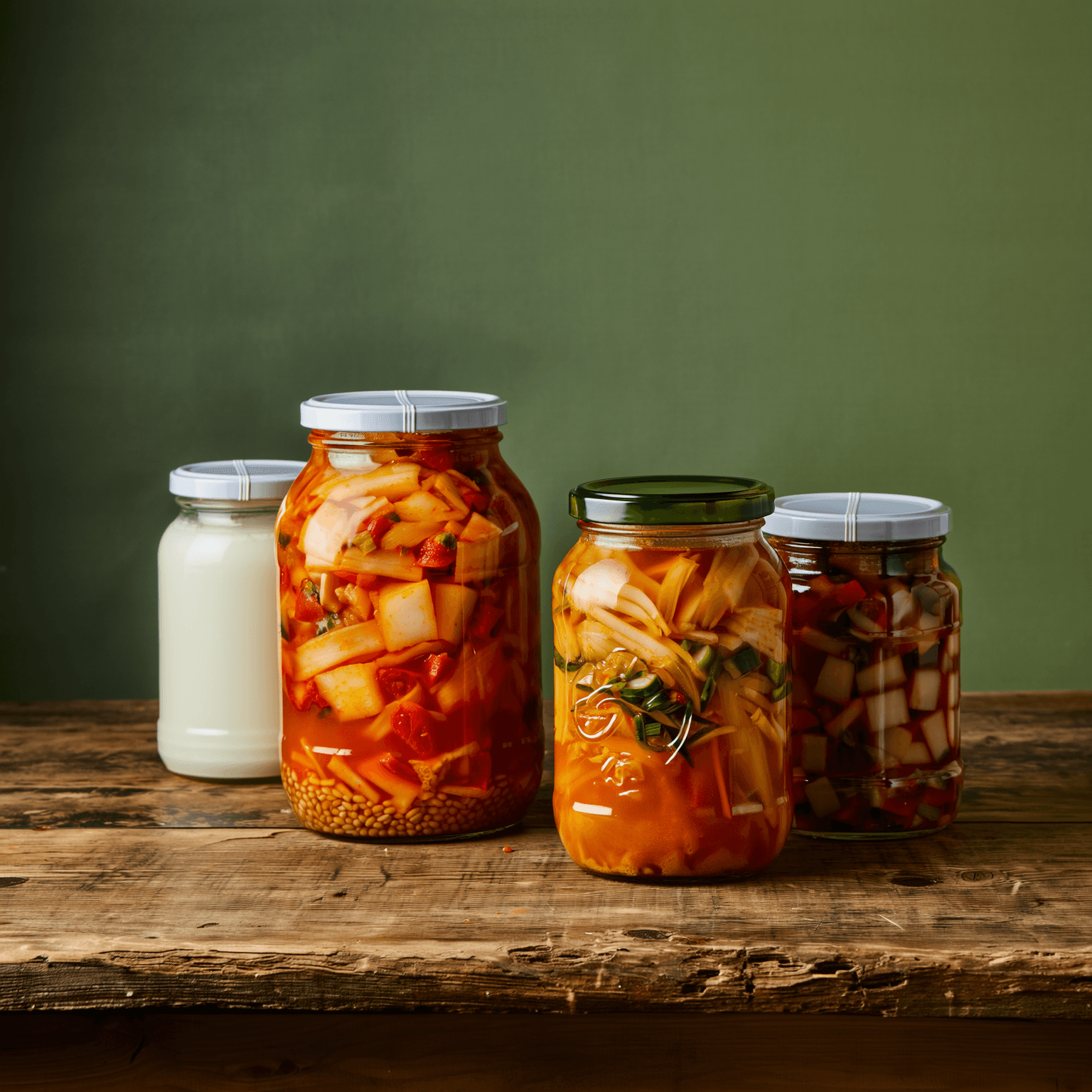
**Fermented foods** are among the most powerful tools for microbiome health. Yoghurt, kefir, kimchi, sauerkraut, miso, tempeh, and kombucha all contain live bacterial cultures that add to the diversity of the gut ecosystem. A landmark 2021 Stanford study published in Cell found that a diet high in fermented foods increased microbiome diversity and reduced inflammatory markers — including markers associated with depression — more effectively than a high-fibre diet alone.
**Prebiotic-rich vegetables** feed the organisms already in your gut. Jerusalem artichokes, chicory root, garlic, leeks, onions, asparagus, and green bananas are among the richest sources. Even modest amounts — a clove of garlic, half an onion — make a measurable difference to the microbial environment.
**Polyphenol-rich foods** — dark berries, extra virgin olive oil, dark chocolate, green tea — act as both antioxidants and selective microbial fertilisers. Polyphenols are metabolised by gut bacteria into compounds that reduce inflammation and support the growth of beneficial species including Lactobacillus and Bifidobacterium.
What Harms the Microbiome
Ultra-processed foods — those engineered for hyper-palatability, containing emulsifiers, artificial sweeteners, refined starches, and industrial seed oils — appear to be among the most damaging forces in the modern gut. Emulsifiers in particular, common in packaged foods, have been shown to disrupt the mucus layer of the gut wall and reduce microbial diversity. Artificial sweeteners, despite being calorie-free, alter the composition of the microbiome in ways that impair glucose metabolism and, in some studies, promote anxiety-like behaviour in animal models.
Chronic antibiotic use — even a single course — can deplete specific bacterial populations for months or years. While antibiotics are sometimes medically necessary, their overuse represents a significant, underappreciated cost to long-term mental health.
A Practical Starting Point
You do not need to overhaul everything at once. Start by adding one fermented food daily — a spoonful of sauerkraut, a glass of kefir, a serving of full-fat yoghurt. Add one prebiotic vegetable to each main meal. Reduce ultra-processed foods not by restriction alone, but by crowding them out with the above.
The microbiome responds quickly. Studies show measurable changes in microbial composition within three to five days of a significant dietary shift. The brain, following the gut's lead, tends not to lag far behind.
Brain Pantry
Science-backed. Nature-rooted. Gut-led.